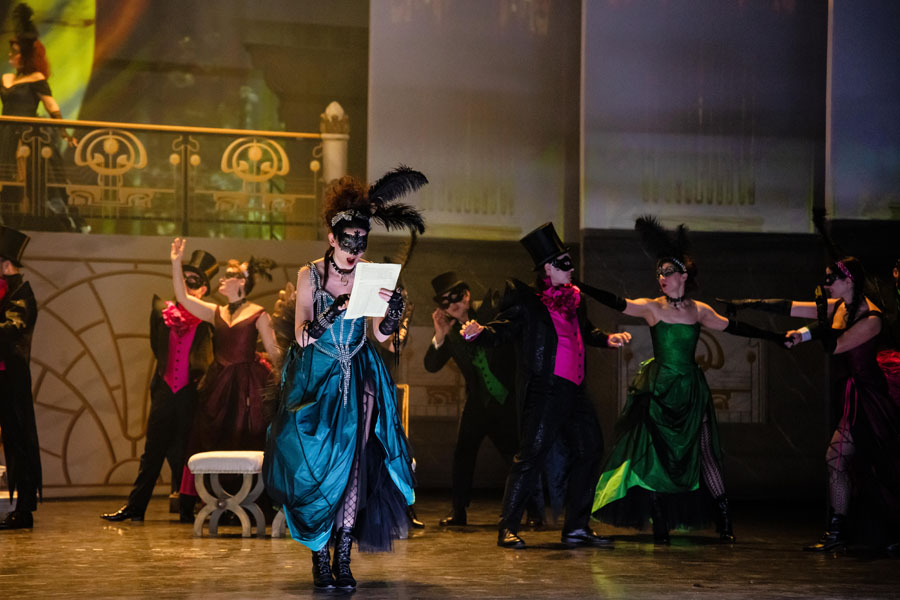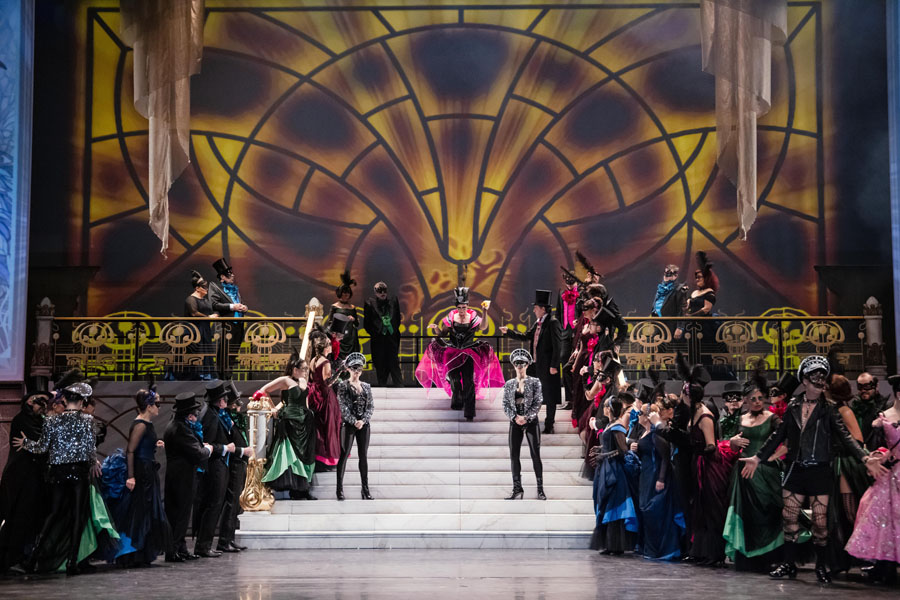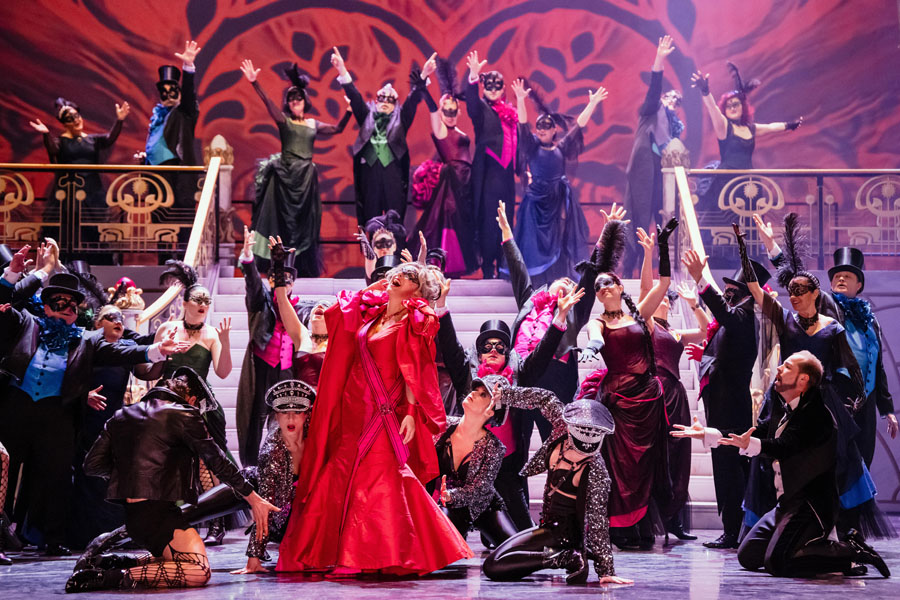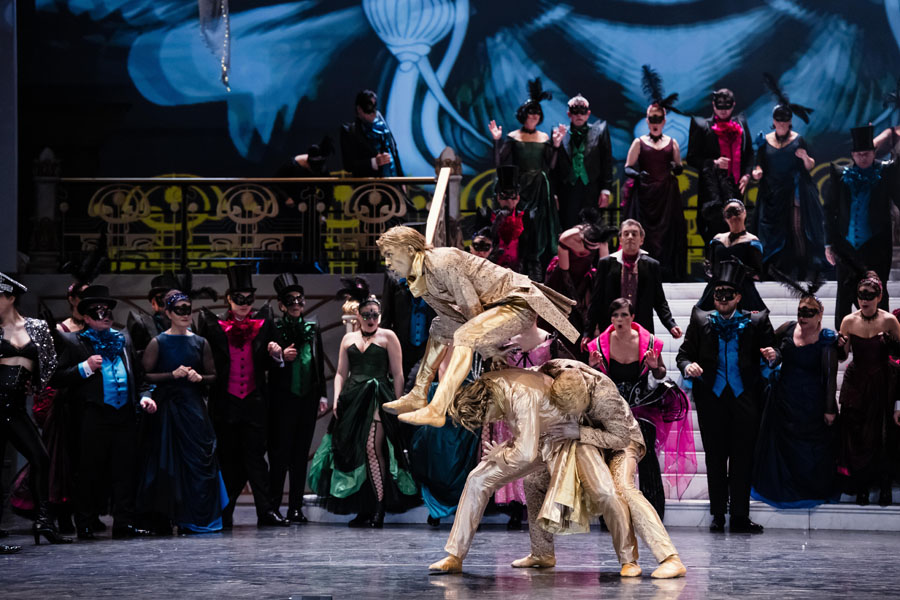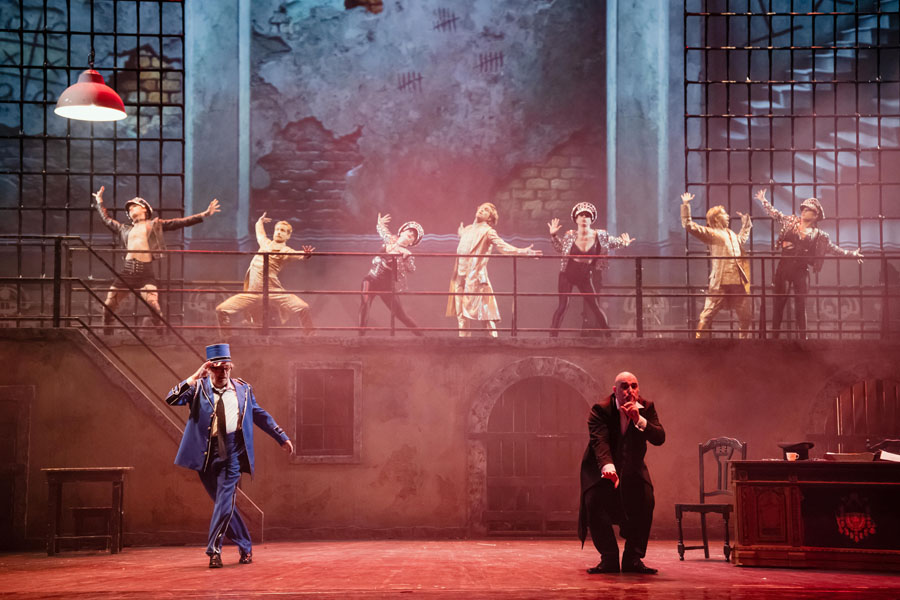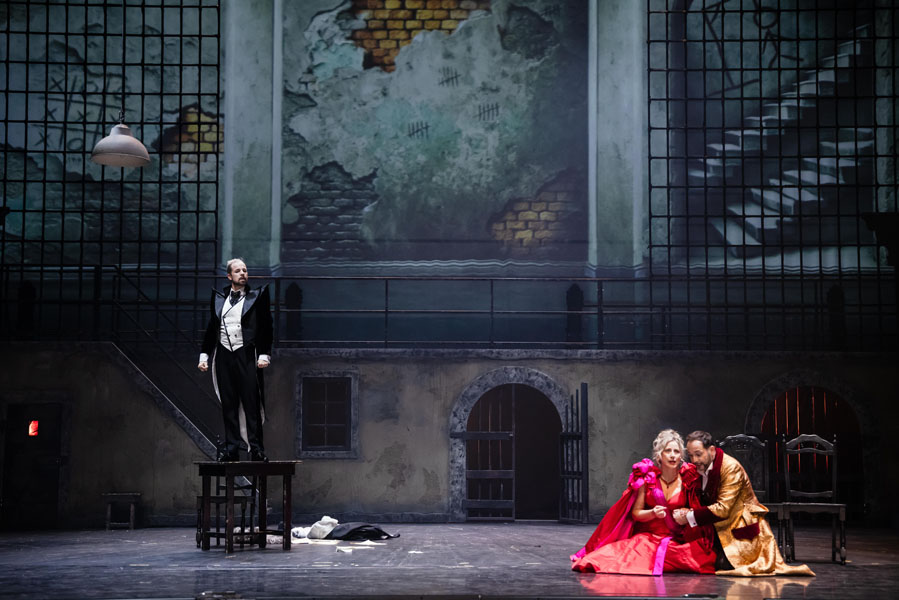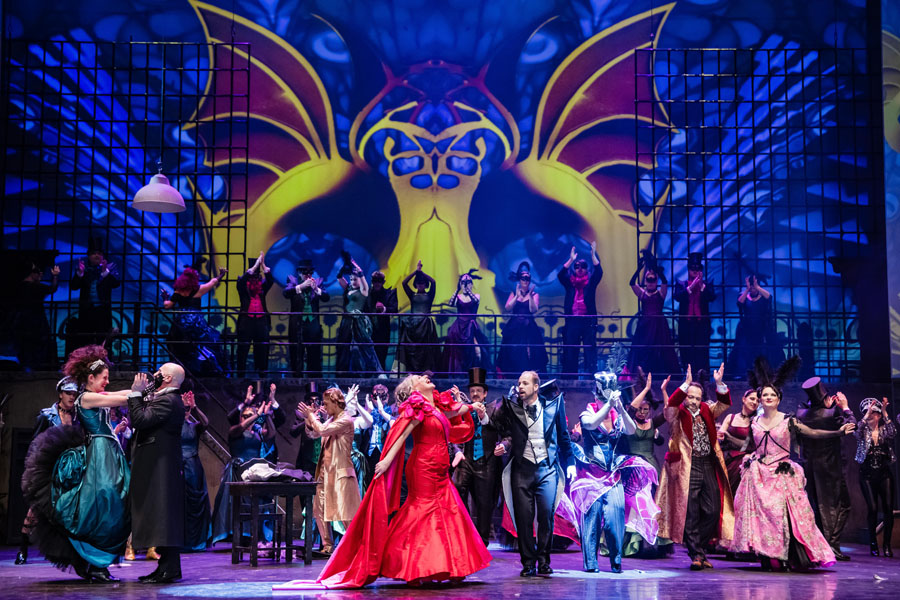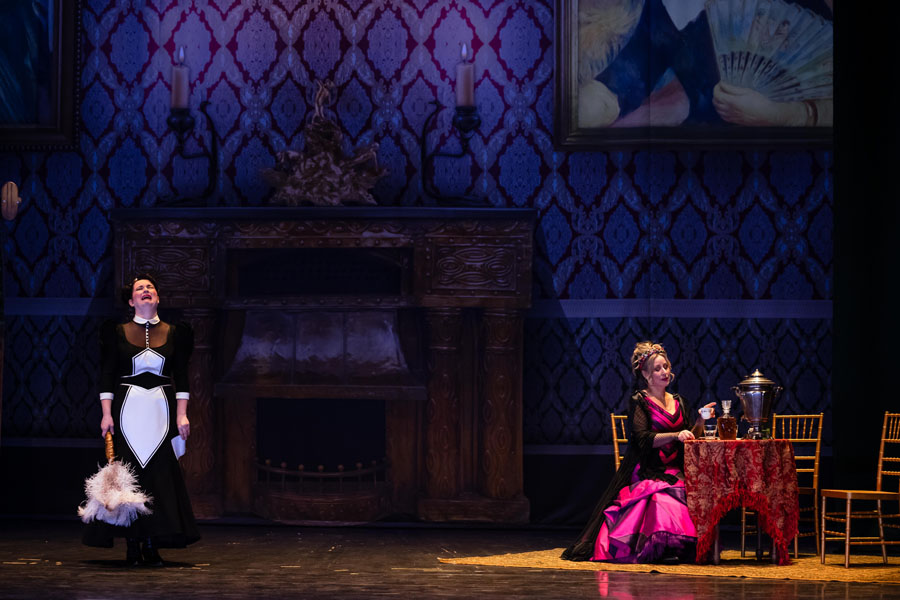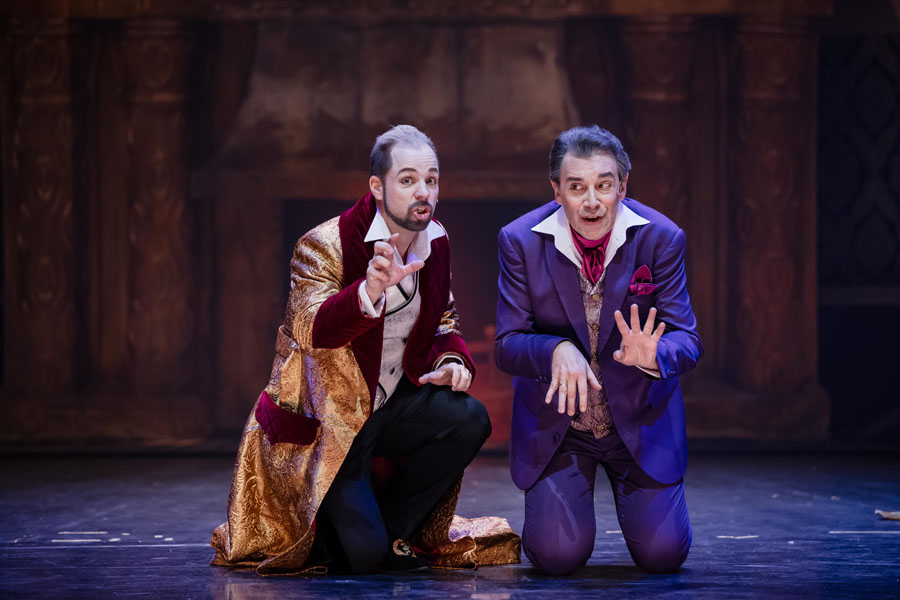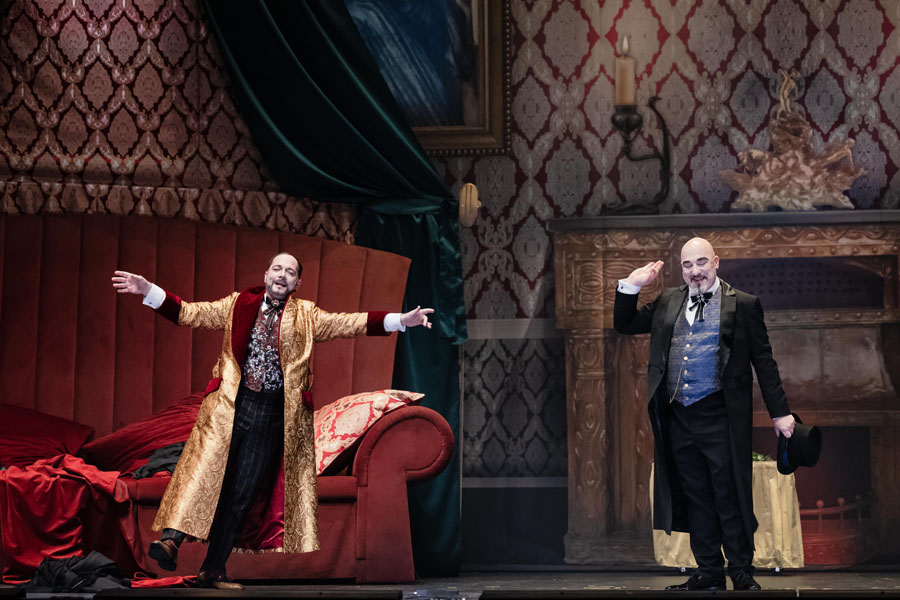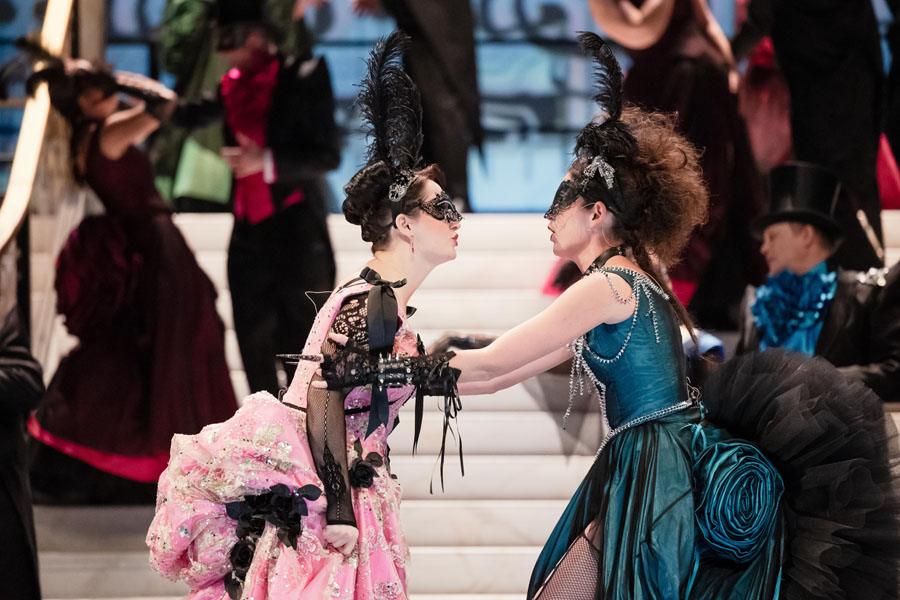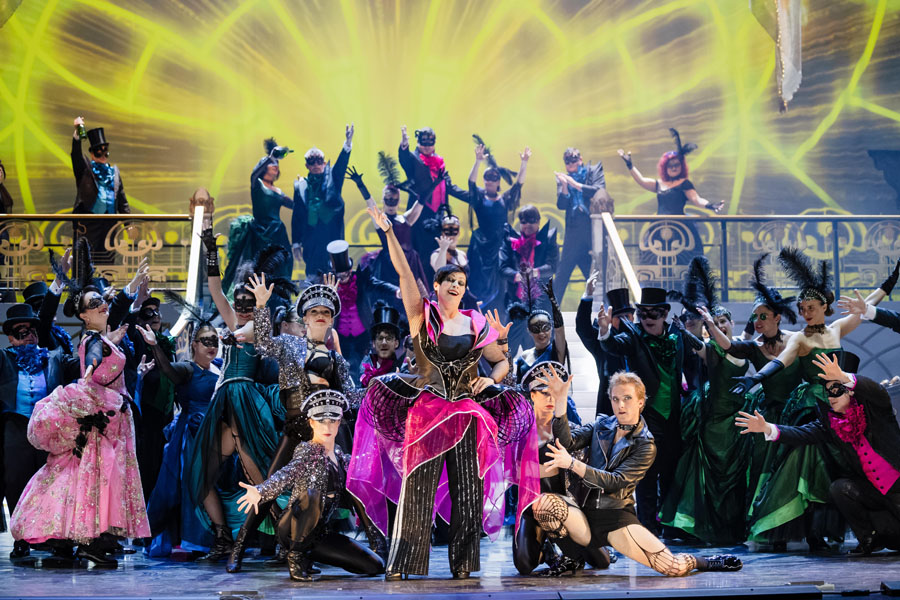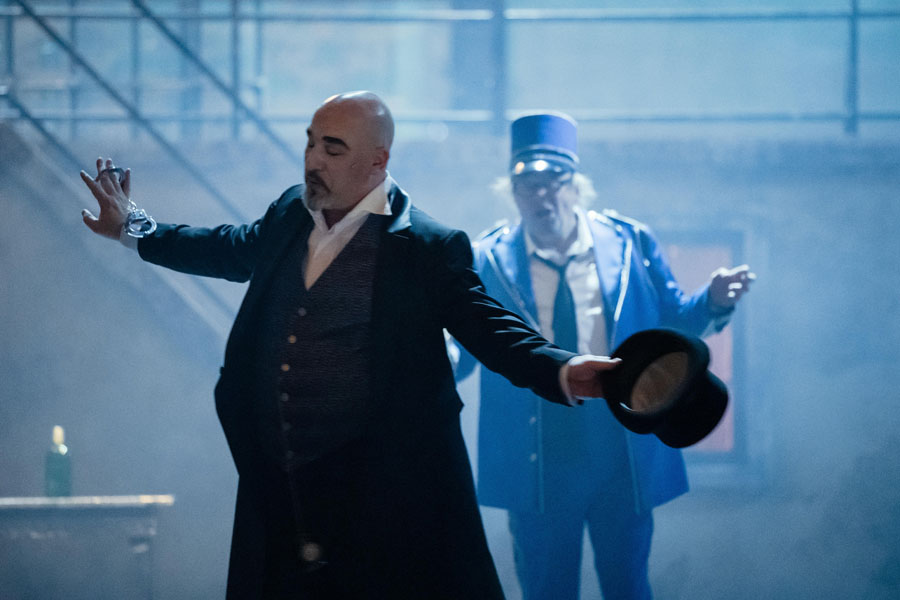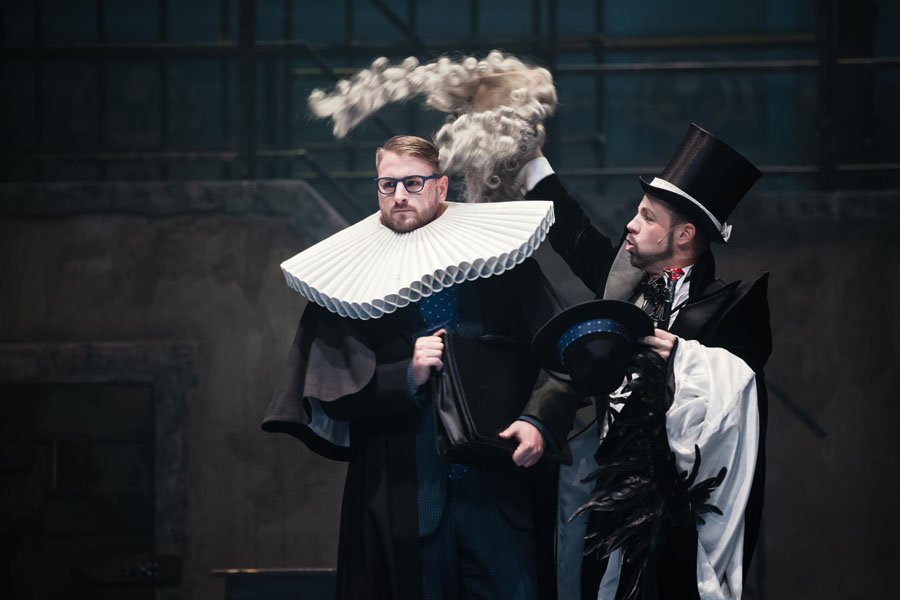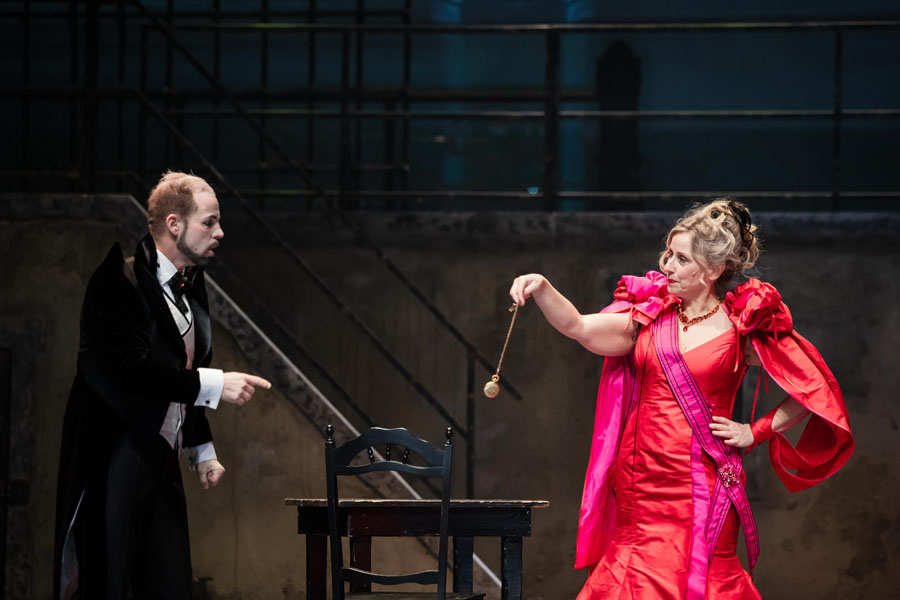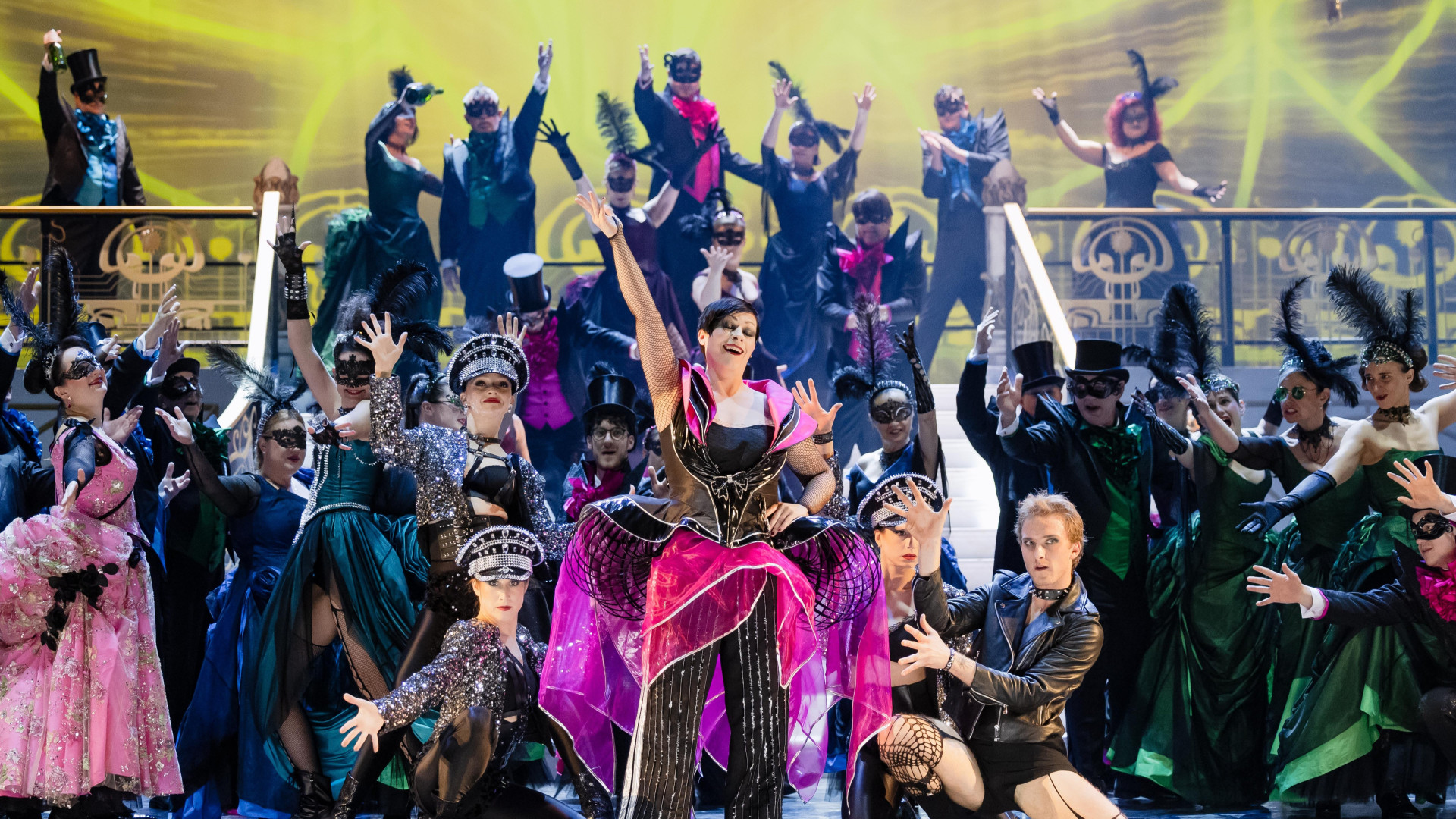
The story of intrigue, masking and sudden plot twists in sumptuous costumes entitled as The Bat is a genuine operetta gem and a famous masterpiece by »the waltz king« Johann Strauss, Jr. that has seen thousands of productions around the world. There is most probably no such an opera stage in the world on which this opera would not feature in all its grandeur the joyousness of the Viennese bourgeoisie of that time. Johann Strauss Son (1825-1899) was encouraged to compose operettas by Jacques Offenbach himself, who felt that the new stage genre suited the king of the Austrian light music down to the ground. The theatre of the 19th century was still not an elitist institution but rather a meeting place for all kinds of people. And his first attempt was already a great success – as his king Indigo and the Forty Thieves, which was premiered in 1871, made its way across the globe - to Paris (1875), London (1877) and New York (1891). It was followed by the Carnival in Rome, which Strauss composed for the Vienna World Exhibition in 1873. Its triumphant march across the European stages could not be stopped even by the severe economic depression that broke in those days. Then came The Bat. Its literary material was French – the famous duo Meilhac-Halévy, who was also responsible for the libretto of the Bizet's Carmen, launched the comedy Le Révellon in 1872. The play then found its way to the leaders of the Viennese Carl Teater, who were particularly interested in the Parisian novelties. It was translated into German by Karl Haffner, who moved its action to the »spa near the Austrian metropolis« (the spa he probably had in mind was Bad Ischl). Then the text mysteriously ended on the table of the director of the competitive Teater an der Wien Maximilian Steiner. Finally, the publishing agent Gustav Lewy came up with the idea that it would be best to remake it into an operetta and offer it to Johann Strauss. The matter started to unwind at the speed of light. Due to the almost complete financial collapse of the Habsburg Monarchy, the theatres were also plunged into a great distress; therefore Richard Gennée immediately signed the contract for the final draft of the text, whereas Strauss withdrew in his villa in Hietzing for six weeks to write the famous operetta. The world premiere in the Teater an der Wien (on 5th April 1874) was not accepted enthusiastically at all, as the reviews referred to it as »a potpourri of waltzes and polkas«. Much greater was its success in June, when staged in Berlin and in the same year The Bat appeared in New York as well. The audience finally recognised it as a genuine masterpiece.
Artists
- Music Johann Strauss Jr.
- Libretto Karl Haffner and Richard Genée after the vaudeville play Le réveillon/The New Year's Eve by Henri Meilhac and Ludovic Halevy (1872), based on the farce Das Gefängnis/The Prison by Julius Roderich Benedix (1851)
- Sung Text Translation Oton Župančič
- Spoken Text Translation and Adaptation Seta Knop
- Conductor Ayrton Desimpelaere
- Stage Director Krešimir Dolenčić
- Choreographer Lukas Zuschlag
- Set Designer Andrej Stražišar
- Costume Designer Alan Hranitelj
- Lighting Designer Andrej Hajdinjak
- Sound Designer Luka Berden
- Video Projections Stella Ivšek
- Language Coach Marja Filipčič Redžić
- Choir Mistress Željka Ulčnik Remic
- Concertmaster Gregor Traven
- Assistant Conductor Jakob Barbo
- Assistant Stage Director Simona Pinter
- Assistant Choreographer Stefan Capraroiu
- Assistant Set Designer Vanesa Garpova
- Assistant Costume Designer Ana Janc
- Répétiteurs Kayoko Ikeda, Višnja Kajgana, Irena Zajec, Irina Milivojević, Stefan Pajanović (chorus)
- Prompters Dejan Gebert, Urška Švara Kafol
Entire cast
- Eisenstein Martin Sušnik a. g./ Matej Vovk
- Rosalinda Mojca Bitenc Križaj/ Martina Zadro
- Frank Ivan A. Arnšek/ Marko Ferjančič
- Alfredo Aljaž Farasin/ Dejan M. Vrbančič
- Falke Rok Bavčar/ Slavko Savinšek
- Blind Gregor Ravnik a. g./ Edvard Strah
- Orlovski Elena Dobravec/Gordana Hleb k. g./Norina Radovan/Sara Briški Cirman a. g.
- Adela Eva Černe Avbelj a. g./ Nina Dominko/ Štefica Grasselli
- Ida Martina Robinšak/ Lora Pavletić
- Frosch Tomaž Gubenšek a. g.
- Dancers (all a. g.) Mateja Železnik, Anja Möderndorfer, Maja Železnikar, Maj Žan Peršin, Izabela Sušnik