Anton Foerster
The Nightingale of Gorenjska
Opera in Two Acts
The Slovene Dramatic Society and the Slovene Provincial Theatre were important not only for the growth of Slovene dramatic production in the second half of the 19th century, but also for encouraging the development of domestic musical stage works. It is impossible to imagine the work of composer Anton Foerster without them. Czech by birth, Foerster came to Slovenia in 1867 and remained there until his death. He was active not only in the Dramatic Society, but also served as regens chori at Ljubljana Cathedral and taught music at various schools. As a composer, he created numerous orchestral, vocal, and sacred works. He is remembered above all as the author of the first Slovene national opera.
The Nightingale of Upper Carniola (Gorenjski slavček) was originally conceived as an operetta in response to a competition organized by the Dramatic Society, which offered two prizes each for an operetta and a libretto. The jury, consisting of Bedřich Smetana, Karel Bendl, and Ljudevit Procházka, awarded first place to Foerster. Under his direction, The Nightingale of Upper Carniola was first performed on April 27, 1872, at the Provincial Theatre.
Twenty years later, Foerster decided to transform the operetta into an opera. The libretto by Luiza Pesjak was revised by Czech librettist Emanuel Züngl, while Foerster composed several additional musical numbers and replaced the spoken dialogue with recitatives. The opera premiered on October 30, 1896.
In later years, The Nightingale of Upper Carniola underwent further revisions and additions, as critics felt the opera had certain weaknesses. Nevertheless, Smetana had already noted in his assessment that the work possessed fresh melodies, imagination, skillful harmonization, and effective orchestration. The opera repeatedly returned to the repertoire of the Ljubljana Opera. The most recent production, staged in the 1996/1997 season, was largely based on the version prepared in 1953 by conductor Rado Simoniti and director Osip Šest. Among Slovene operatic works, it is regarded as the most popular, the most accessible, the most lyrical, and, thanks to its folk spirit, particularly pleasing both to the ear and the eye.
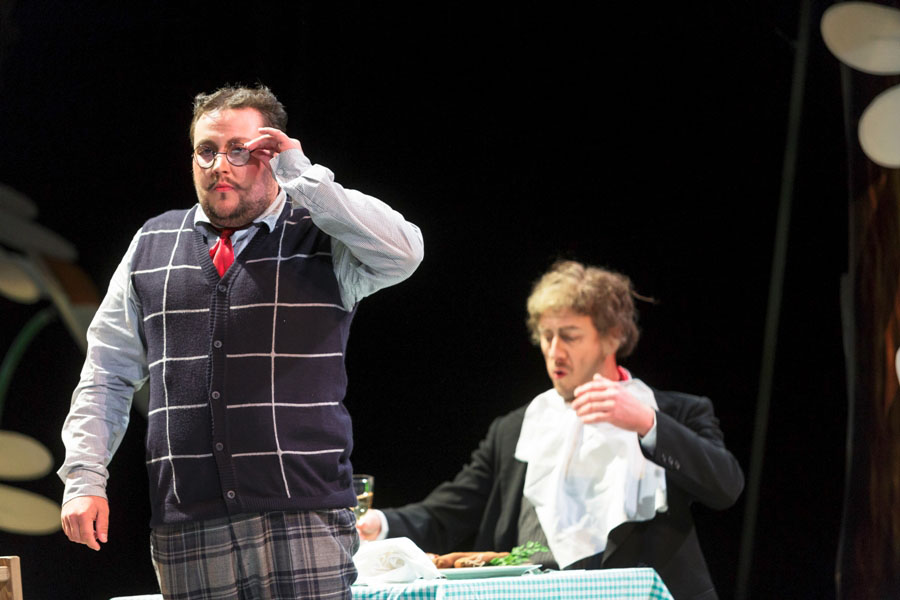
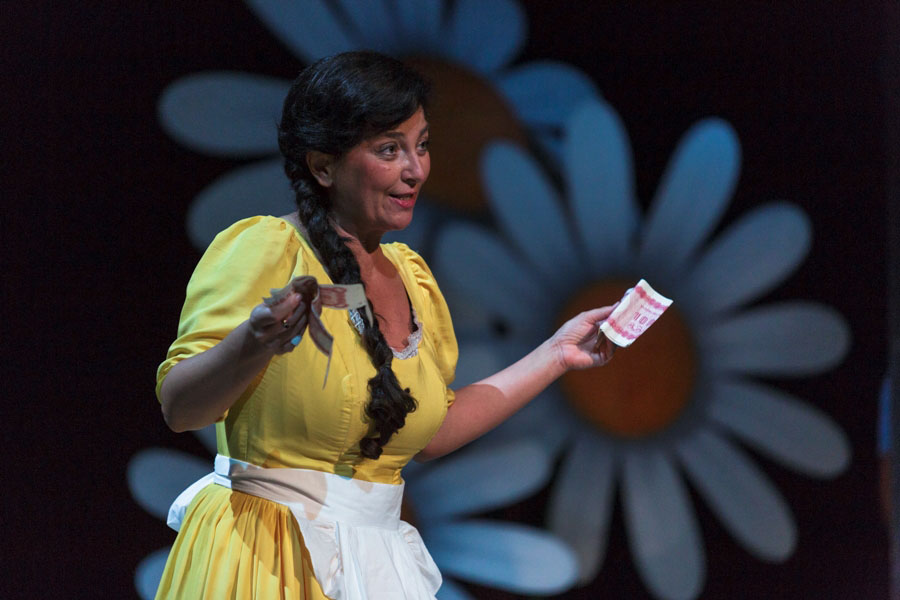
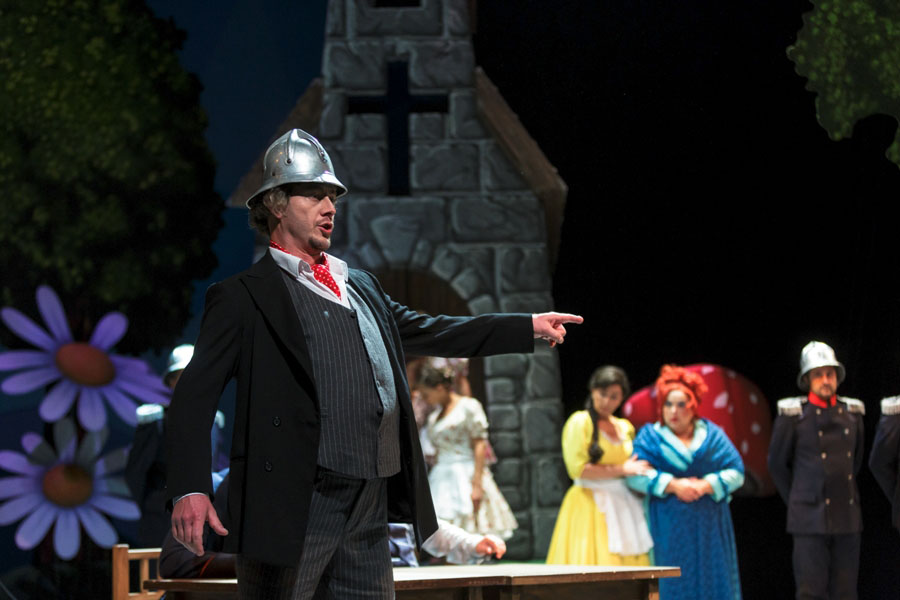
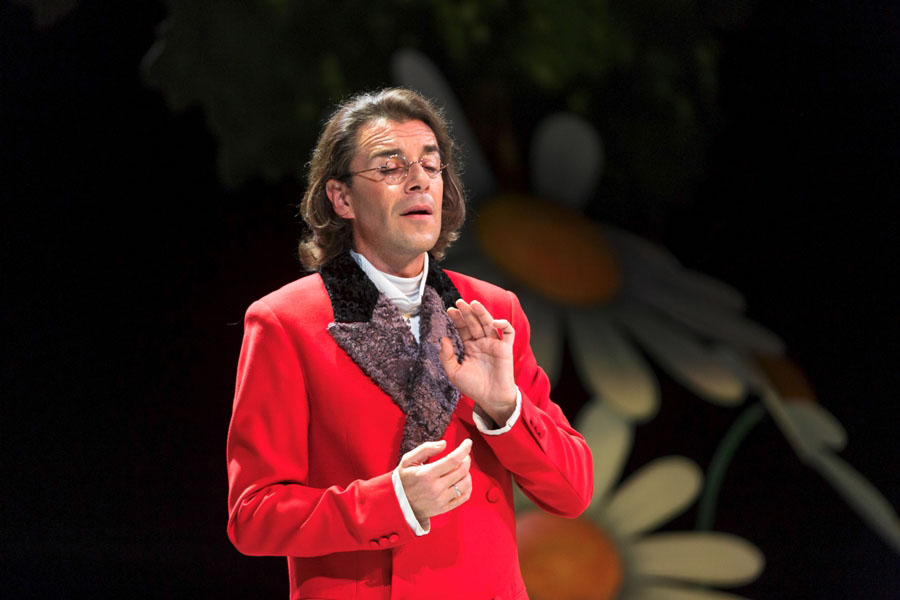
The story of this Slovene operatic classic follows Franjo, who returns to his hometown, where he is eagerly awaited by his friend Lovro and by his sweetheart Minka. At the same time, the entertainer Chansonette arrives in the idyllic Upper Carniolan village. Hearing Minka sing, he immediately decides to take the young woman out into the world so that she can train her voice and earn a living through singing. This all takes place while Minka’s family is being driven from their home by creditors. Although Chansonette offers money, the villagers resolve to prevent the outsider from carrying out his plans.
The director of the new production of The Nightingale of Upper Carniola is Vito Taufer, known for numerous outstanding productions at the Slovene Youth Theatre, where he is employed, as well as at other Slovene theatres. His productions are always infused with a strong sense of theatrical magic, marked by bold directorial vision and carefully developed concepts. He has devoted particular attention to directing classical dramatic works, including Slovene classics, which under his guidance have appeared in a completely fresh and different light.
Slovene theatre audiences know him as the creator of many successful productions, and his work is a regular feature of Slovene and international festivals throughout Europe and beyond. On our stage he has directed The Barber of Seville (1990), Così fan tutte (1991), The Bear and Les Mamelles de Tirésias (2004), The Turk in Italy (2005), and The Love for Three Oranges (2006).
Text by: Tatjana Ažman.
Artists
- Music Anton Foerster
- Libretto Luiza Pesjak and Emanuel Züngl
- Conductor Jakob Barbo
- Director Vito Taufer
- Revival director Matej Prevc
- Costume designer Barbara Podlogar
- Set designer Samo Lapajne
- Make-up and hair designer Tomaž Turk
- Lighting designer Pascal Mérat
- Choreographer Sanja Nešković Peršin
- Dramaturg Tatjana Ažman
- Language coach Nevenka Verstovšek
- Choirmaster Željka Ulčnik Remic
- Concertmaster Gregor Traven
- Assistant conductor Leon Felix Schlagintweit
- Assistant choreographers Stefan Capraroiu, Gregor Guštin
- Répetiteurs Kayoko Ikeda, Višnja Kajgana, Irena Zajec, Irina Milivojević, Stefan Pajanović
- Choir répetiteur Stefan Pajanović
- Prompters Dejan Gebert, Urška Švara Kafol
- Executive producer Polona Kante
Entire cast
- Majda Elena Dobravec / Mirjam Kalin / Margareta Matišić a. g.
- Minka Mojca Bitenc Križaj / Štefica Grasselli / Nika Gorič a. g.
- Franjo Aljaž Farasin / Gregor Ravnik a. g.
- Chansonette Rok Bavčar / Slavko Savinšek / Darko Vidic a. g.
- Ninon Eva Černe Avbelj a. g. / Nina Dominko
- Štrukelj Saša Čano / Janko Volčanšek a. g.
- Rajdelj Rusmir Redžić / Aljaž Žgavc a. g.
- Lovro Robert Brezovar / Marko Ferjančič
- Innkeeper Klemen Gorenšek a. g. / Zoran Potočan
Choir, Ballet and Orchestra of SNG Opera and Ballet Ljubljana
Notifications
10. 09. 2026
The 2026/2027 Season Is in Full Swing!
We will then continue the season with a highly acclaimed production that premiered last season: Giuseppe Verdi’s La traviata, directed by Frank Van Laecke.
The performances from 22 to 26 September will be conducted by Ayrton Desimpelaere.
Gallery